Introduction (a little bit of the initial story)
Hey guys, I am Giordano! Welcome to the first post of a series where I’ll share my startup experiences. I’ve read many stories on Medium and now I want to write mine too. Thanks to Artem Shelamanov for inspiring me.
The journey started when I was an undergrad in Civil Engineering at the Federal University of Juiz de Fora, which is where I’m from. I didn’t have much experience with tech — just some basics about programming. I wasn’t really enjoying Civil engineering, but I wanted to finish my degree quickly.
It all started in there… with those extracurricular activities in college designed to make you think you’re on the right path.
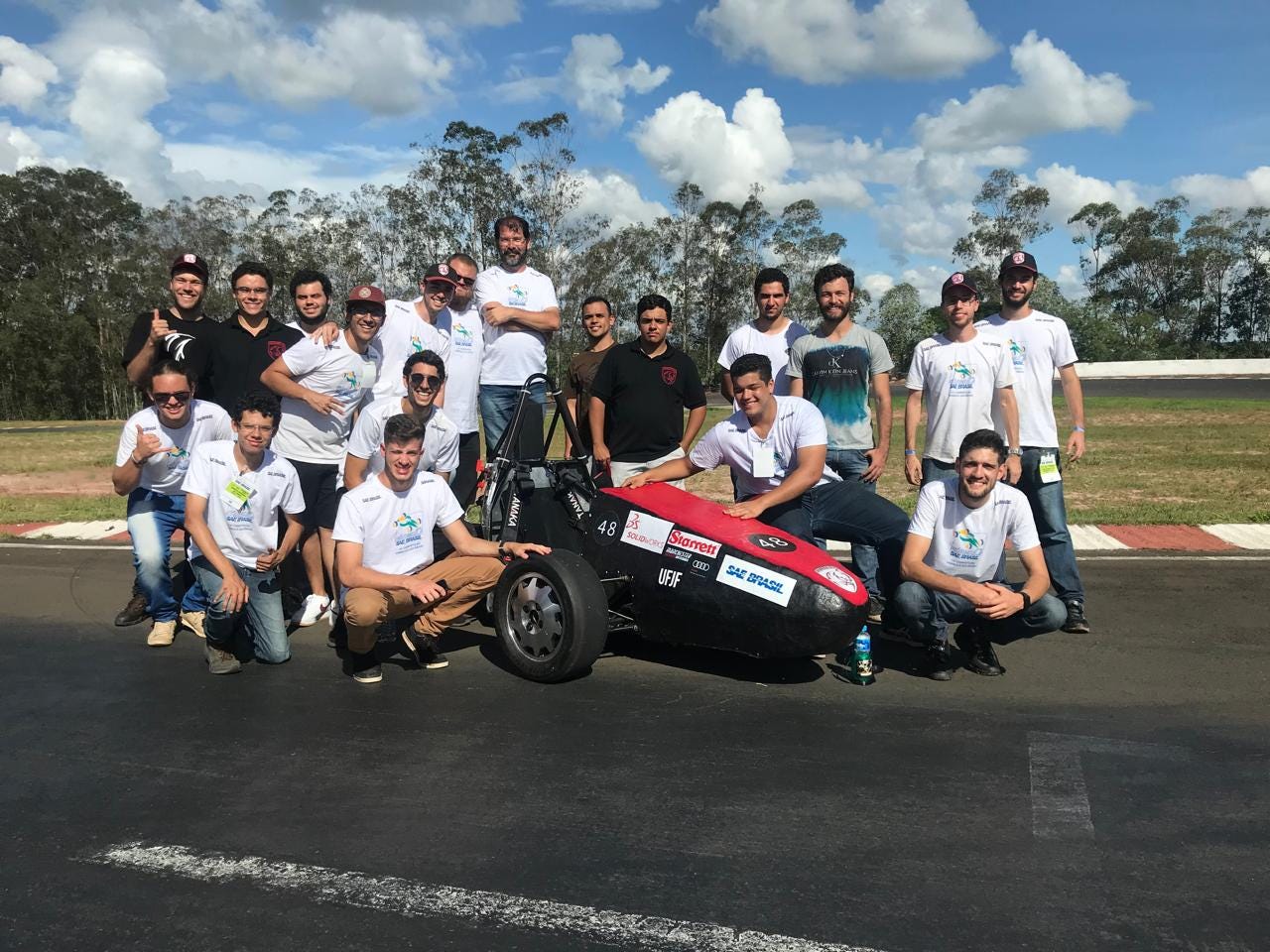
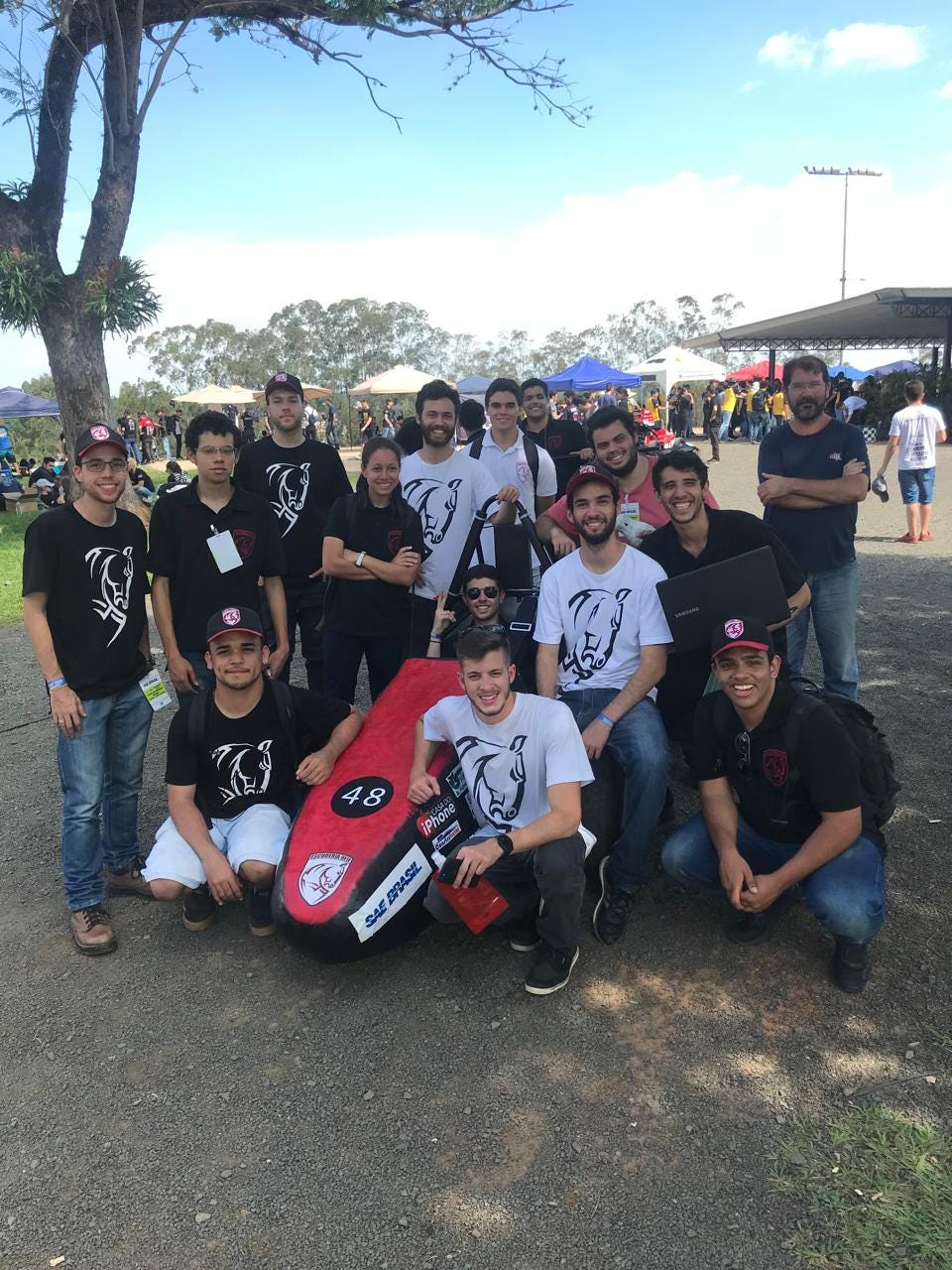
At the time, I was part of a Formula SAE competition team. It’s not reeeeeeally related to the startup, but it’s a cool story I want to share. We basically tried to build Formula-like cars and give them a whirl in the national championship. Our team was young (I was about 20 at the time) and inexperienced (we hadn’t yet completed our project to deploy our functioning car), but it was the activity that kept me focused during college. Days and months passed, and we hit a major snag — money, as always. We needed to find sponsors asap. That’s when I first discovered my love for sales and business.
We managed to secure funding from a local mechanic shop, giving us the breathing room to buy the final parts for the car so we could qualify for the national competition. The team could finally relax — but not for long. While reviewing the last bits of regulation for the competition, we realized we had one last task: we had to do a project with schools for educational purposes (I know, Wtf is this realted to the competition), but rules are rules.
Luckily, I had an ace up my sleeve. My friend was the heir to a school business and connected me with his father (the owner). One of the perks of living in a small town. We booked a meeting with him and managed to organize a workshop for the school students. Uhhh, damn, now we were done with the tasks for our trip.
The last part of the introduction (I swear):
We managed to meet all the regulations for the competition. But then, our powertrain team hit a wall — they couldn’t find a way to boost our car’s motor (we named our car “Pé de Pano”). It wasn’t starting, and we were just a week away from the competition. In true Brazilian fashion, we said, “Screw it, let’s fix it there.”
The day of the competition finally arrived. We were truly unprepared. All the other teams had really nice cars. We just sat in our pit stop, waiting for the judges. And, to no one’s surprise, we were disqualified. You thought was and victory story, dont you =). But we found a fantastic place to learn for our next gols.
So, why am I telling you all this? Because at this competition, a friend of mine suggested we look for new challenges, startups and all of this. He recommended a platform called “Preparo,” where you can find new opportunities to work on…. and that, is how everything begin.
Finding the people to work with
After our great failure, it was my turn to leave the team and pursue what had been on my mind. So, I ventured once again into the vast and magical world of young unemployed entrepreneurs, trying to follow my friends’ advice.
Preparo became my target for finding my very first team. It had a lot of new startup ideas, and the AI era had not yet come, but one really caught my mind.
The first step you take there is to know who you are going to be working with, and I connected with a doctor and another engineer, both older than me. The plan was to build a health startup, something way beyond my mere knowledge. The catch was that I had no experience with programming, sales, or startups. Luckily, neither did they. 😂
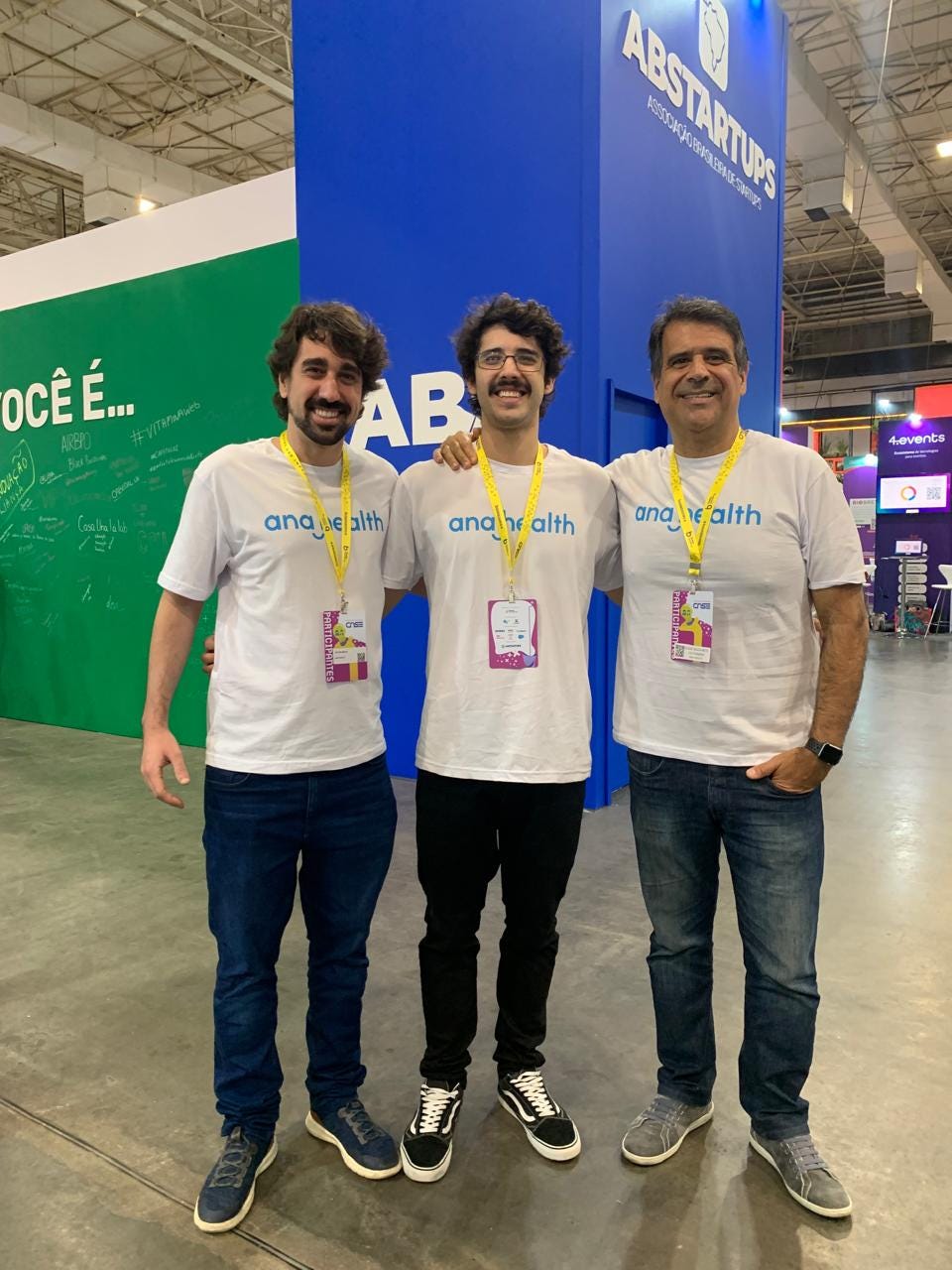
To put names to faces, my partners were Olívio and Victor.
Olívio, a former heart surgeon, brought his extensive experience with major healthcare providers and the public sector to our team. The oldest among us, his background in surgery made him intensely focused. He pushed us forward every day, literally. In every meeting, your heartbeat would grow. This intensity was invaluable for our startup, constantly driving us to push our boundaries.
Victor, on the other hand, is an industrial engineer and university professor. He is one of the smartest people I’ve ever met, capable of comprehending complex concepts in any area with just a single reading. His attention to detail is extreme; he can spot even the smallest error and will insist on perfection. Unlike Olívio’s intensity, Victor is calm as a monk, which made him the perfect person to lead and coordinate all our operations.
They set our goals and served as my role models throughout this journey. By now, they feel like family to me.
So guys, always choose to work with people you truly admire.
We came from three different generations, but this diversity helped us thrive through the challenges.
I will describe my team later, but for “part 1” this is a little taste.
So, Gio, you’ve made me read all this way, but you still haven’t told us how you came up with the startup idea…
The Ideia
Our startup’s journey didn’t begin with my insight, but rather with the vision of Olívio, a renowned heart surgeon here in Brazil. Olívio is a pioneer in minimally invasive heart surgery, a new approach that uses robotic technology to perform operations without opening the chest. He has always been at the forefront of medical technology, even leading the first video-assisted surgery in Brazil. His expertise has taken him to consulting roles in Italy, China, USA, Colombia..
However, one thought constantly occupied Olívio’s mind: while these advanced technologies addressed highly specific medical problems, they were only useful for small group of patients. During his time in London and Chicago, Olívio was introduced to two different models of public healthcare: Accountable Care Organizations (ACOs) in the USA and the National Health Service (NHS) in the United Kingdom. These models emphasized a healthcare team responsible for the well-being of a large population, focusing on family and community medicine.
This journey was responsible for the insight: what if we applied cutting-edge technology to the base of the healthcare pyramid, rather than just the specialized top? This idea became the foundation of our startup!
And that guys, is a very nice advise, you dont always need to be the person to come up with the ideia =)
But, how does all of this apply in Brazil, Gio?….
Well, let me introduce o couple of thing for you guys.
You may know Brazil for two things: soccer and Carnival. I don’t blame you because that is kinda true in our culture (and yes, we love soccer). But it’s not the endless party you might think it is. We have very deep structural social inequality. In Brazil, access to quality healthcare is often a privilege of the few, while the majority struggle with inadequate resources.
Here, you are either subjected to two paths: public or private healthcare.
Context:
Our public healthcare system, SUS (Sistema Único de Saúde), is intended to be a role model for other countries. It is based on the principle of providing comprehensive, universal, and free healthcare to all Brazilian citizens. While the concept is admirable, the reality is that SUS faces numerous challenges, including underfunding, overcrowding, long wait times for treatment, and issues of corruption.
According to IEPS (Instituto de Estudos para Políticas de Saúde), in Brazil, 72.69 million people do not have access to the basic care program of SUS, and of these, 33.3 million also do not have private health insurance. To cover only those exclusively dependent on SUS, investments of approximately R$ 11.2 billion are needed.
We have a total population of 200 million people….
On the other hand, private healthcare in Brazil is accessible to those who can afford it, offering faster and more specialized services. Currently, around 49 million people in Brazil have private health plans. However, this creates a significant disparity in the quality of care received by different socioeconomic groups.
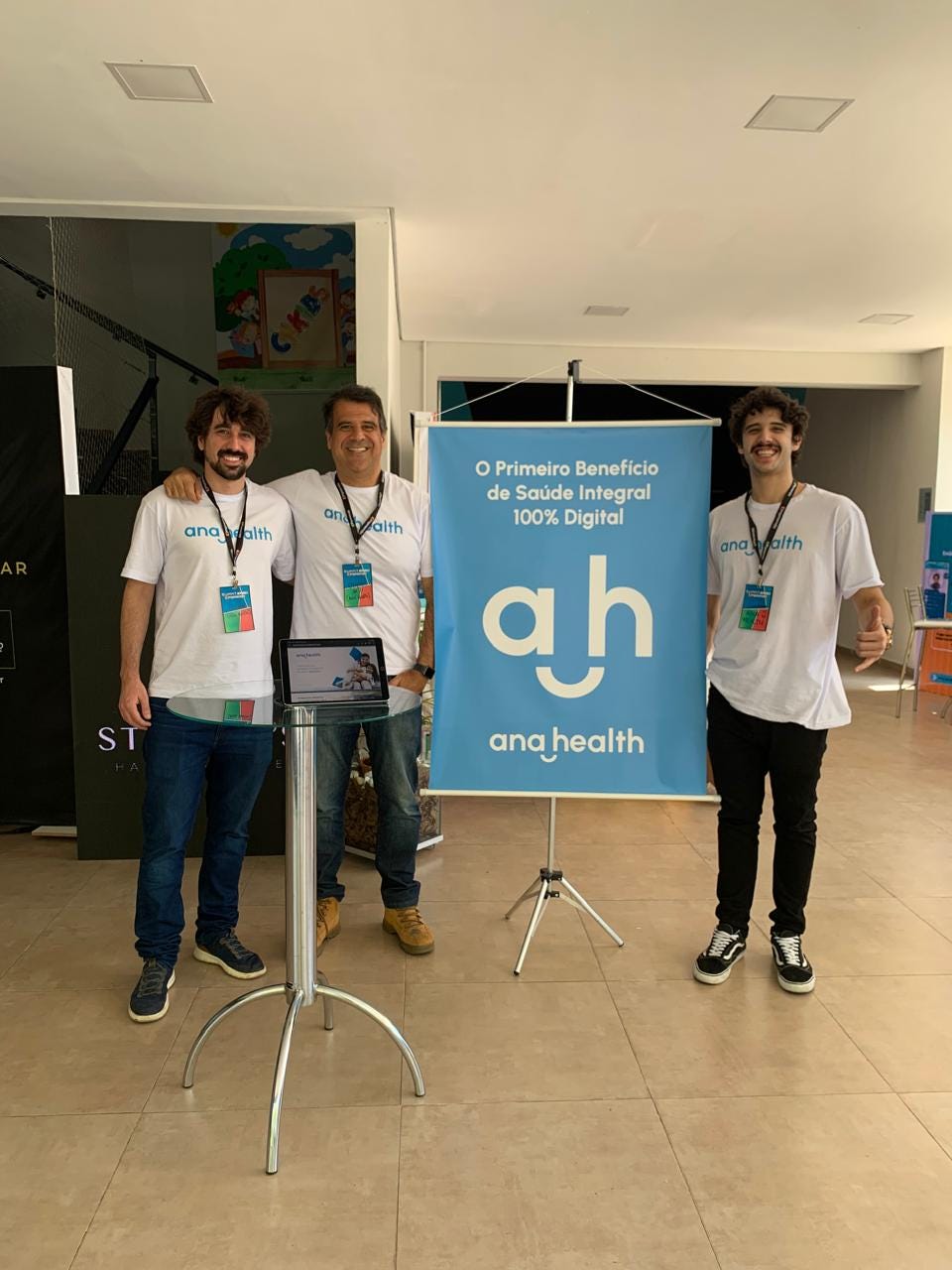
At Ana Health, we aim to reduce this gap by bringing technology to the base of the healthcare pyramid. Making quality healthcare more accessible to everyone, regardless of their financial situation. In essence, our work at Ana Health is about redefining healthcare in Brazil. We believe that innovation should serve everyone, and by addressing the root of the problem, we can make a impact in our country.
Note:
Thanks a lot for reading, guys! It was a pleasure to write, and I think I’ve found a new hobby. Please share your feedback so I can always improve! If you liked and want to hear part 2, just leave a comment! Thanks a lot! Love you all.