Hey guys this is the series about our journey of building a healthcare startup in Brazil. In the last stories, we faced a little bit different path, as well as getting the ideia of your startup, forming a team, creating your MVP stack. And now, we can focus on the hardest part of the entrepreneurship, selling your company to customers.
You can see the other blogs here:
- The Journey of Building a Healthcare Startup in Brazil: Starting in 2021. Part 1
- The Journey of building a healthcare startup. The mvp. Part 2
- The story of how we got our first paying customer. Part 3
We got the MVP, How about clients?
Just a quick reminder of the last story. Our team had just developed what we could call our “MVP,” the scrappy product that is the foundation of our startup. This is where most founders feel relieved, thinking the hard part is over because they’ve created the blessed product that will save their company. But that is a dangerous fallacy. Especially when you’re not in Silicon Valley or some golden baby cradle that will automatically grow your startup and magically attract funding.
The reality is that after the “product,” our journey had just begun. It’s the point where you need to prove that your idea is valuable to people. No one cares about your solution besides you and your team (except my dog, he cares a lot). It was time to start mastering the very hard skill that every founder should have: sales.
I know, I know, you might be thinking, “You gotta have a technical founder; he is the most important piece in a startup, there is no life without coding…” but this is a paradigm we need to shift. Sometimes, and especially in our country, sales are what will lead the way.
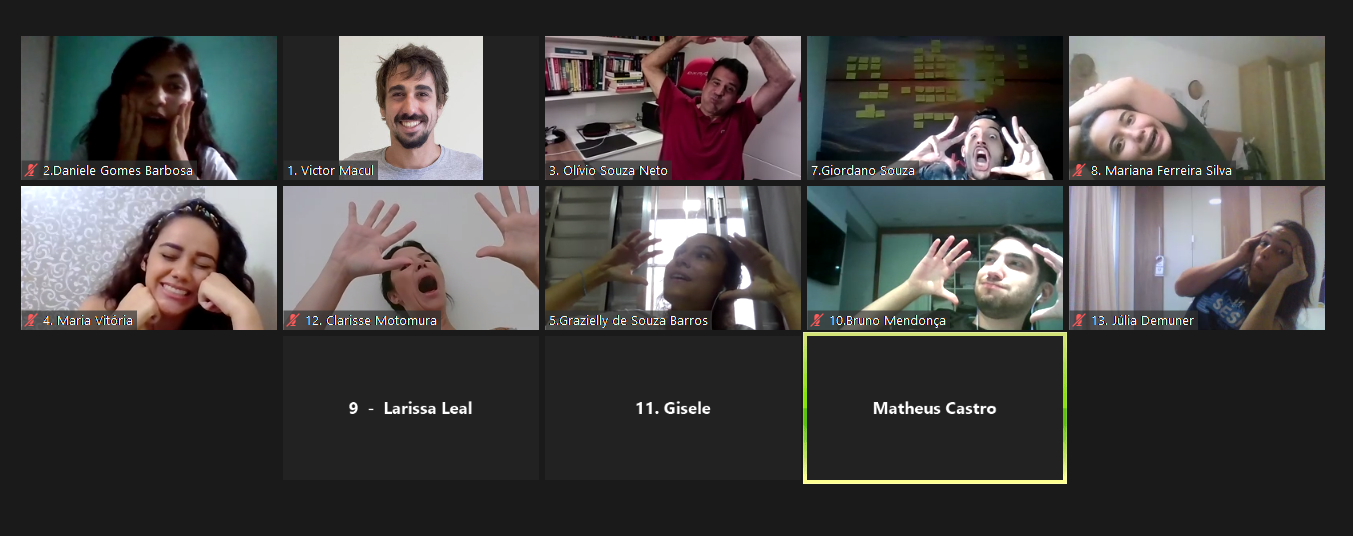
Remember the platform I mentioned in the very first blog about Ana Health’s story, “Preparo”? While the company was being created, we had a team of interns to build our commercial processes. I was one of them too, that’s how we really started thinking about business here. As you can see in the picture below, we were about thirteen people trying to start the initial culture of the startup.
This was one of our first meetings of the startup, and those goofy faces were part of a little play we were doing to get to know each other. Would I do it again? I think yes.
So, our next step was to get everyone thinking about sales.
I remember we were just jumping into Christmas gatherings with each other’s families when we started planning how to develop our commercial process. Every night, we would bring new ideas and insights from good articles and classes to read. We couldn’t afford a consulting company to help us with this mission, so we dug our way in. Some of these questions really haunted us:
- What is a cold call?
- How to prospect clients?
- How to find your clients?
- What the f* will I say to them during a meeting call?
- What software are good for selling?
- And so on…
Funny thing is, I remember the very first “Sales Course” that I did in this little learning phase: Reev.academy. (You can search it if you want, but that is NOT a recommendation). As I’m writing this, I remember how innocent I was in this process. The course taught me the basics, but it was the kind of course that just gave “brushstrokes” of general knowledge, made just to sell to someone. Real life is a lot different than that.
We spent about 2 to 3 weeks learning. And then, we found the key piece of knowledge that would mold our commercial process. Thank you, bold guy on YouTube; I dedicate this article to you. Let me show you a screenshot of this masterclass that we found online. It was called the “Sales as a Science” course, and it gave us all the insights we needed to at least build our first playbook. Below, you can have a peek at this masterpiece.
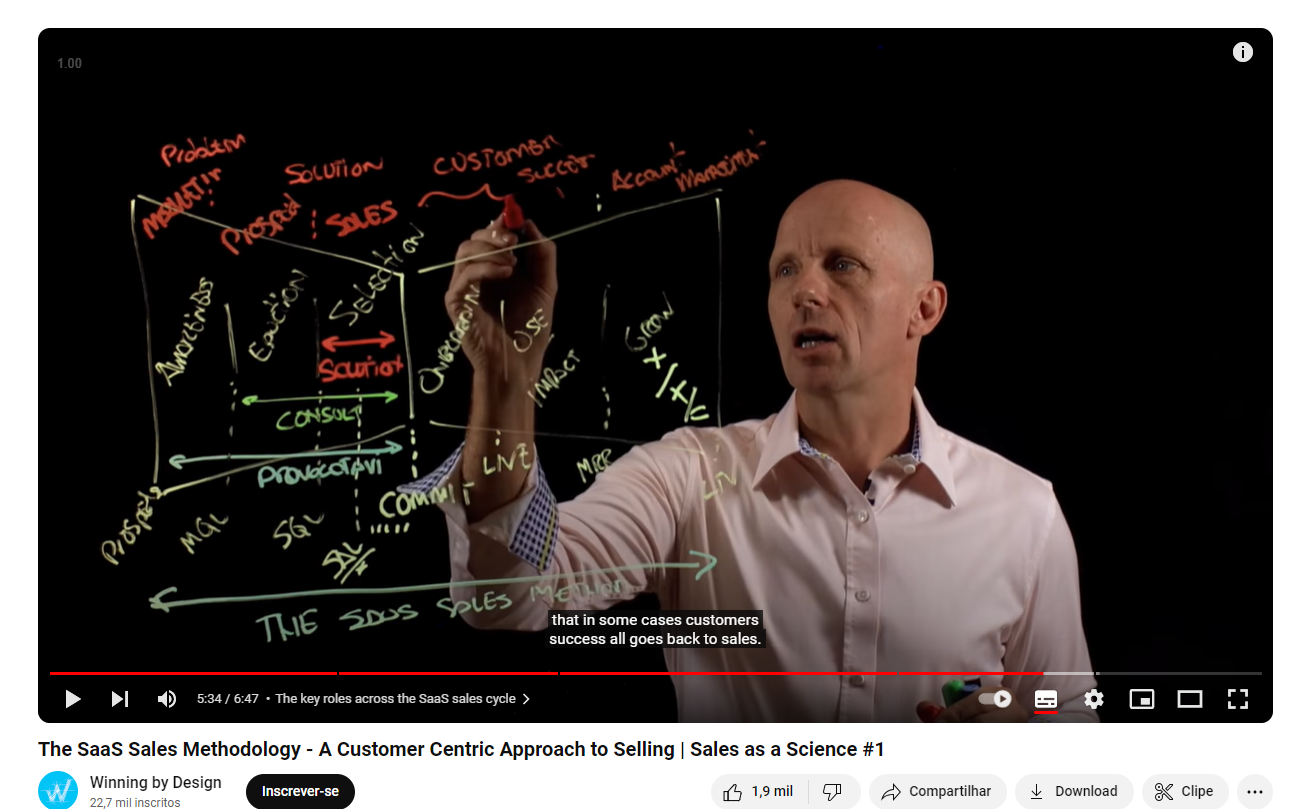
The time went on, and we started fantasizing about our commercial process — the grand plan of how we were going to conquer the market. So, let me make things clear. Our plan was initially to sell to companies, making the process significantly harder than targeting individual customers. First, we needed leads to fill up our commercial funnel and start having meetings. As we learned from the bold guy, we needed to prospect and talk to people.
There were many methods to do this: Email, LinkedIn, Cold Calling, and Marketing.
After much deliberation, we decided to start with Cold Calling. We divided ourselves into “pods” where each “pod” would focus on a specific niche or territory. At that time, we had about eight people calling. Since we knew nothing about our niches, we tried every option we could think of. Here are some examples: bakeries, beauty salons, supermarkets… As you can see, these are some of the most traditional businesses, so they were more likely to answer our calls.
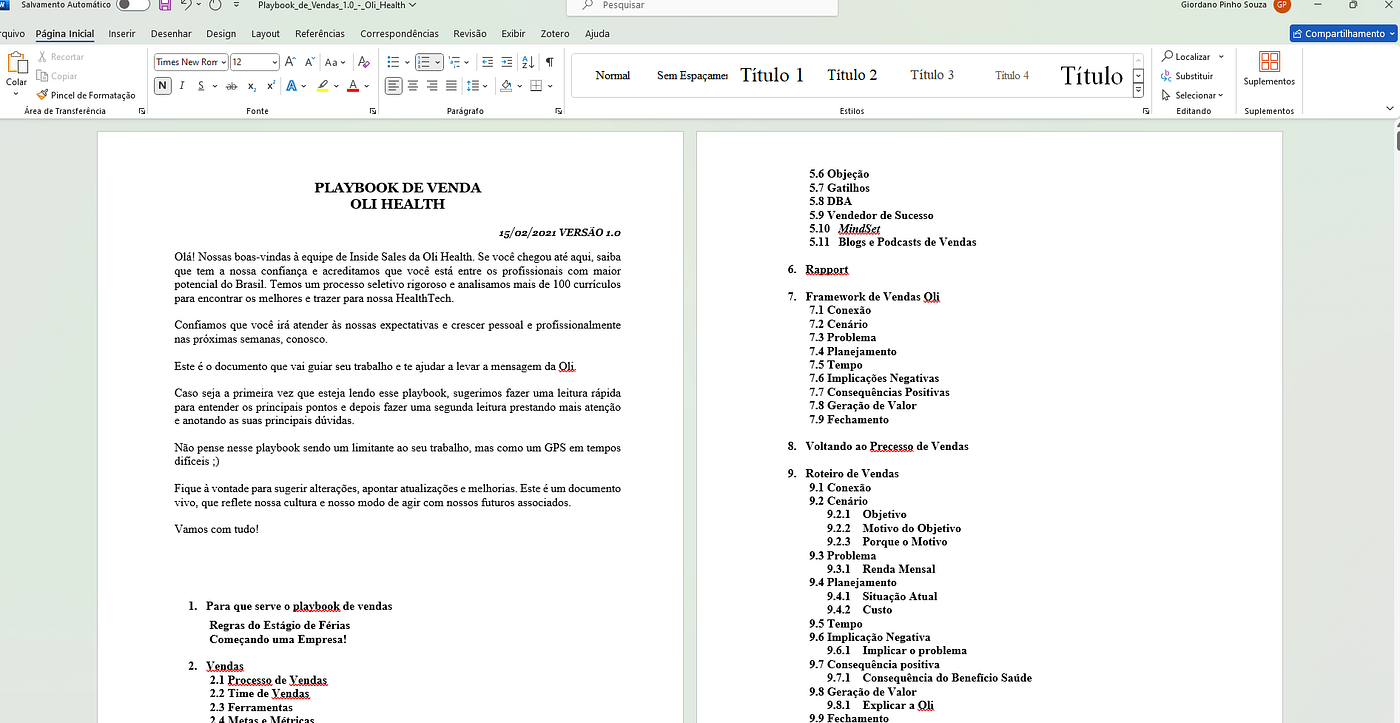
To guide our routine, we created a little playbook. This is something I want to share with you guys. We shamelessly copied all of the text from another company’s playbook that we managed to get our hands on and adapted it to our startup. It was a significant milestone because it was our first glimpse into building “processes” within the company. And guys, this is one of the big lessons we learned along the way: Your startup is built upon processes — literally everything.
Our health consults, our cold calls, our daily routines — all needed to be documented. In our case, it was all in Notion.
So, let’s get back to our sales journey.
As I was telling you, our “milestone 1” was building our playbook and starting to call our first hypotheses of niches. Time went on, and after about 2–3 months, we had zero results. It was painful. During those months, we did roleplay sessions, aligned metrics, shared what was working and what wasn’t, and reviewed objections. Our hard skills were growing, but our process still yielded no results.
But then, all of a sudden, we managed to sell our solution to one person. Yes, we called an organic farm and spoke to one of the owners. She really liked the idea and wanted to try it for herself. Shoutout to Matheus Kojala, the seller responsible for our very first paying client. With a background in acting, he was really comfortable with cold calling. This win gave our team a little energy boost and inspired us to start calling tech companies and startups.
This idea was the one that started scaling our meetings. As we were calling about 100 companies per week, some meetings started to appear, and things began moving from 0% to 0.9%. Our routine remained the same: daily meetings, calling sessions, reviews, and goals. We started to separate the team, with one group creating lists and the other making calls, and we switched roles each week.
For the record, guys, this is the story about how we managed our first company sale.
As our routine continued, we got a meeting with a company called “Sflabs”, a small software house based in São Carlos. It was a family business, and we were lucky enough to talk to the founder. We had about three meetings with them, showed our solution, tried to address all objections, and boom — our first paying customer. The team was ecstatic. Another shoutout to Maria Victória, the person responsible for the closure!
At the time, we had about 30 people on our platform — 8 paying customers and the rest were our family . Fast forward to today, three years later, and we have customers in 22 states across the country, missing only five to complete the map. The journey is hard, really. You’ll think about quitting every damn day.
And this, folks, is the story for today.
CODA
A quick fact: sometimes, I “mentor” (just talk about my startup mistakes ) new startups that were in the same accelerator program as we were three years ago. Recently, I had a call with a lady founder of an ESG startup. She started asking me questions about the typical results startups achieve and mentioned her struggle to get sales meetings with potential clients. She was solely relying on LinkedIn and emails for prospecting.
I asked her one simple question: “Do you cold call?”
Her reaction was priceless — she looked like she’d seen a ghost. She admitted she was terrified of it and had never tried. Bingo, we found her bottleneck. She wasn’t thrilled when I told her, “If the founder doesn’t call, who will?” but I tried to soften the hit.
In that same meeting, she mentioned they had only managed to get four meetings with clients, and it had been a real struggle. She thought that the niche she was trying was not good for them. With my usual finesse, I told her four wasn’t even worth discussing; she needed to talk to more than 100 customers/companies to get her startup on track. (For context, I think we had more than 400 proposals in Ana Health’s life, not counting the disqualified leads and Cold Calls.)
When I shared that, I could tell she felt uncomfortable because I was just spitting truths she didn’t want to hear. She stopped asking questions, and we ended the meeting with an awkward laugh.
Thanks again guys for all the loving and support. Especially from my friends. It is a little bit hard to keep up with the stories, but it is something worth doing. I’m thinking about writing about other topics as well.. So for now, I’m going to reflect on the whole process. Love you all. Best.